Keynote Speakers
Keynote 1
Abstract: The 20th century taught us to process data; the early 21st taught us to connect it. Today we are reaching a new turning point: the birth of the Internet of Agents. We are moving beyond just smart devices that sense the world to a proactive ecosystem of embodied intelligences - agents that not only sense the environment, but also anticipate and shape it. In this talk, I will explore world-model-based robot learning as the engine of this transformation. By moving beyond reactive control toward generative foresight, AI agents are able to reason about the future before they inhabit it. Finally, I will introduce CarDreamer, our open-source platform designed to accelerate this journey within the high-stake domain of autonomous driving.
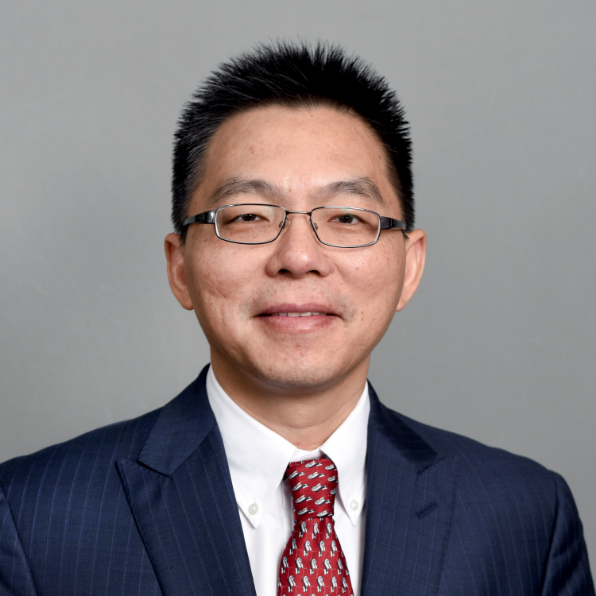
Bio: Junshan Zhang has been a professor in the ECE Department and CS graduate program at University of California Davis since 2021. He received his Ph.D. degree from the School of ECE at Purdue University in Aug. 2000, and was on the faculty of the School of ECEE at Arizona State University from 2000 to 2021. His research interests fall in the general field of information networks and data science, including edge AI, reinforcement learning, world model, robotics, wireless networks. He is a Fellow of National Academy of Inventor (class of 2024) and the IEEE (class of 2012), and a recipient of the ONR Young Investigator Award in 2005 and the NSF CAREER award in 2003. His papers have won a few awards, including the Best Student paper at WiOPT 2018, the Kenneth C. Sevcik Outstanding Student Paper Award of ACM SIGMETRICS/IFIP Performance 2016, the Best Paper Runner-up Award of IEEE INFOCOM 2009 and IEEE INFOCOM 2014. He is currently serving as Editor-in-Chief of IEEE/ACM Transactions on Networking.
Keynote 2
Abstract: In this non-technical talk, motivated by a talk by the Father of Information Theory, Claude Shannon, and some relevant writings from Mathematician, Jacques Hadamard, and Philosopher, John Locke, I will discuss opinions and approaches that may facilitate effective mathematical research. The aim is to help extend the focus of research from the outcomes and the products toward the process and the art of problem solving that the best researchers seem to have naturally exhibited.
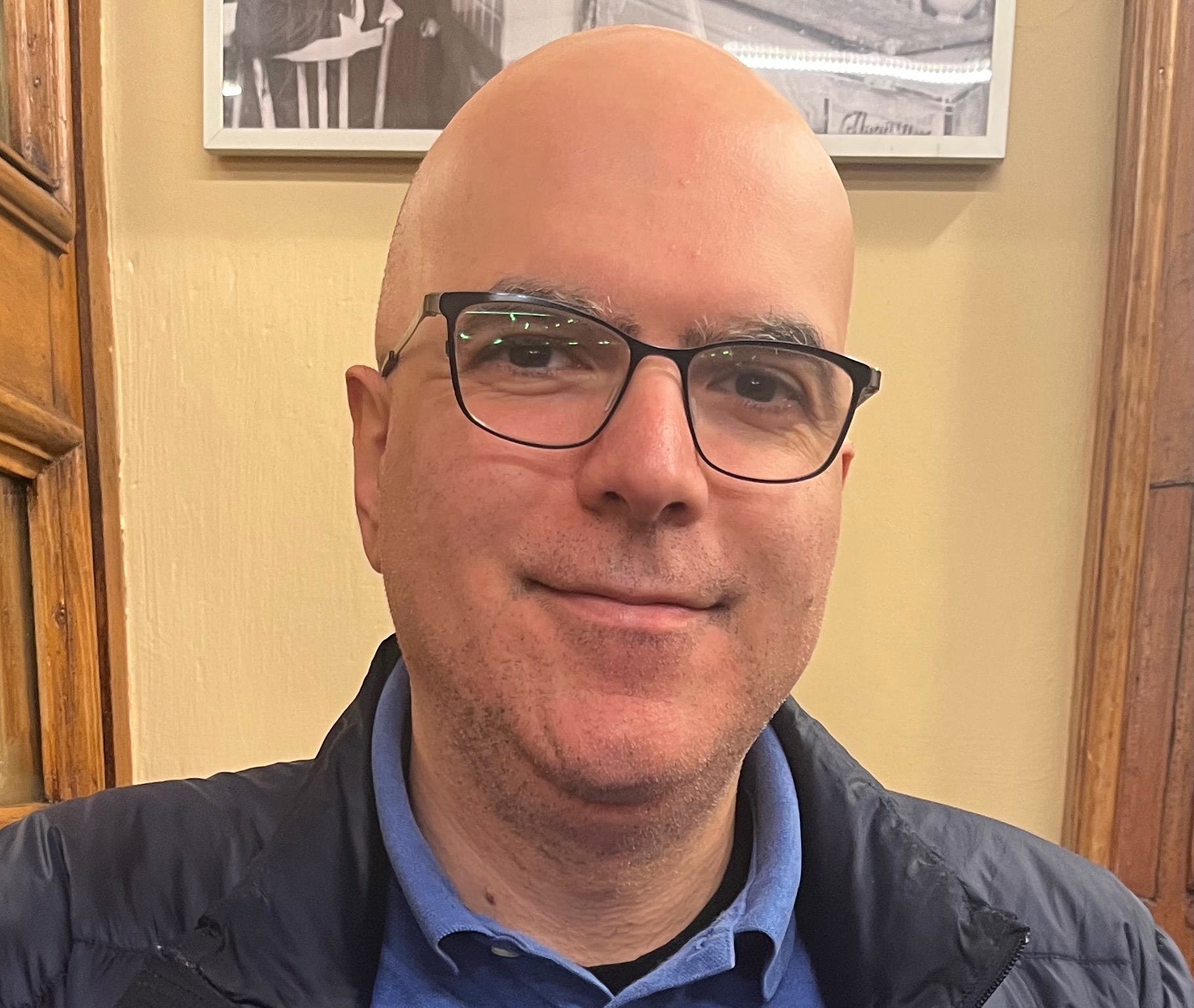
Bio: Atilla Eryilmaz received his Ph.D. degree in Electrical and Computer Engineering from the University of Illinois at Urbana-Champaign in 2005, respectively. Between 2005 and 2007, he worked as a Postdoctoral Associate at the Laboratory for Information and Decision Systems at the Massachusetts Institute of Technology. Since 2007, he has been at The Ohio State University, where he is currently a Professor of the Electrical and Computer Engineering Department. Dr. Eryilmaz's research interests span optimal control of stochastic networks, machine learning, optimization, and information theory. He received the NSF-CAREER Award in 2010 and two Lumley Research Awards for Research Excellence in 2010 and 2015. He is a co-author of the 2012 IEEE WiOpt Conference Best Student Paper, and subsequently received the 2016 IEEE Infocom, 2017 IEEE WiOpt, 2018 IEEE WiOpt, and 2019 IEEE Infocom Best Paper Awards.
Keynote 3
Abstract:
Efficient operation of wireless networks requires optimal decision-making across multiple layers. Traditionally, such problems have been addressed through model-based optimization, where mathematical formulations capture network characteristics and constraints to optimize a performance objective. While this approach is grounded in solid domain knowledge, it often faces limitations due to model inaccuracies and simplifying assumptions that may not fully reflect real-world conditions.
With the rapid rise of machine learning, data-driven methods have emerged as promising alternatives for network optimization. Although such an approach has achieved notable successes, it remains unclear whether they can replace traditional model-based methods. In this talk, I will examine the essence of both approaches by highlighting their respective strengths and limitations in the context of modern wireless networks. I will further discuss how sound models rooted in domain knowledge can complement and enhance learning-based approaches, motivating a unified framework that integrates both model-driven and machine learning approaches in NextG network optimization.
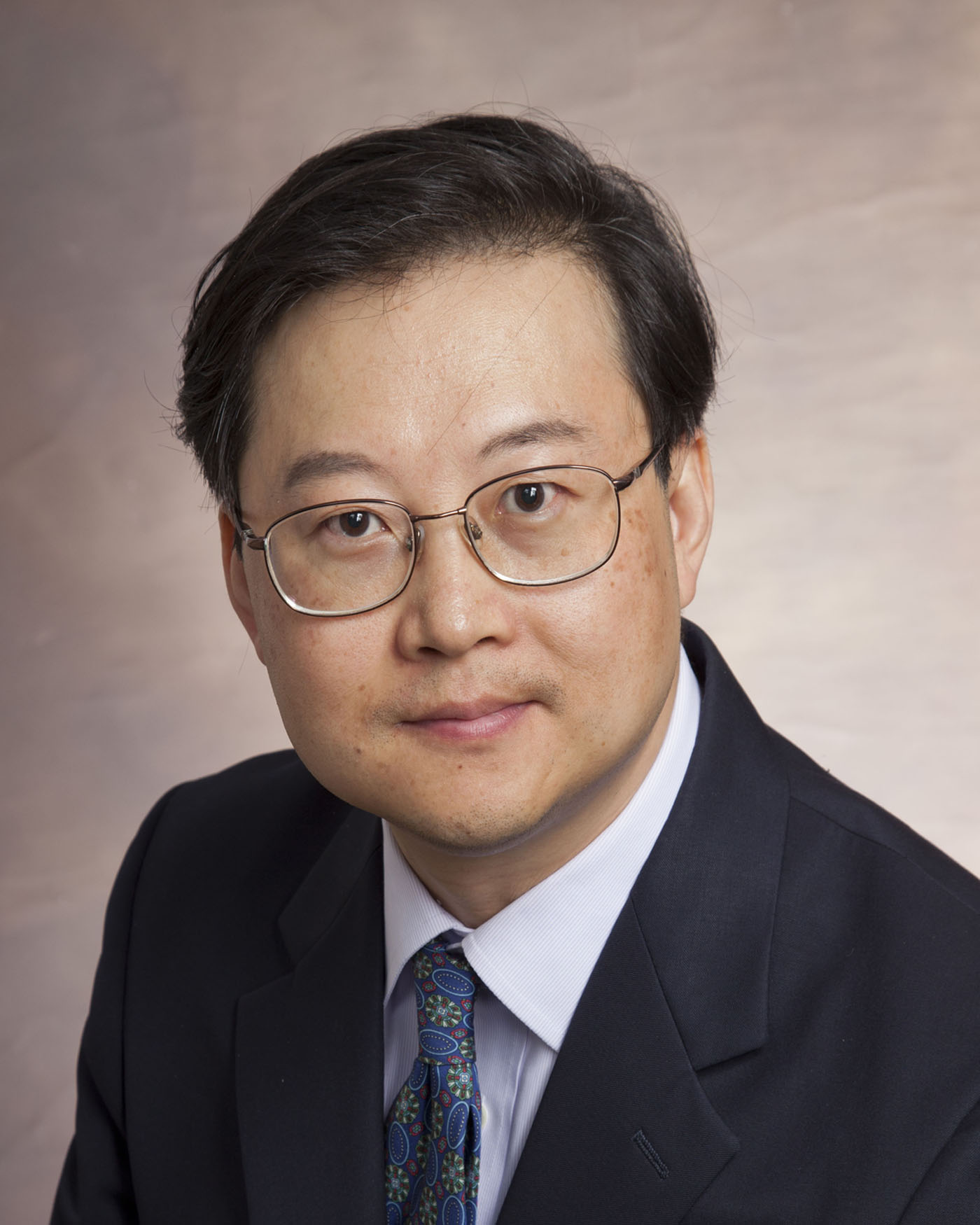
Bio: Thomas Hou received his Ph.D. from New York University Tandon School of Engineering in 1998. He is currently Bradley Distinguished Professor of Electrical and Computer Engineering at Virginia Tech, Blacksburg, VA, USA, which he joined in 2002. He was a Member of Research Staff at Fujitsu Laboratories of America in Sunnyvale, CA from 1997 to 2002. His current research focuses on developing real-time optimal solutions to complex science and engineering problems arising from wireless and mobile networks. He is also interested in wireless security. He authored/co-authored two textbooks and has published over 400 papers in IEEE/ACM journals and conferences. His publications have received 12 Best Paper Awards from IEEE and ACM, including the 2023 IEEE INFOCOM Test of Time Paper Award. He holds six U.S. patents. Prof. Hou was named an IEEE Fellow for contributions to modeling and optimization of wireless networks. He was/is on the editorial boards of a number of IEEE and ACM transactions and journals. He was Steering Committee Chair of IEEE INFOCOM conference and was a member of the IEEE Communications Society Board of Governors. He was also a Distinguished Lecturer of the IEEE Communications Society.